A couple of younger first-time protestors asked me for some tips on what to think about and how to prepare, so I gathered a few notes. I hope these are helpful! Most protests are peaceful and inspiring events, attended by … Continue reading →
A friend recently mentioned to me that they are waking up short of breath and have developed asthma and an allergy to dust. A lot of people are sensitive to dust mites even when they don’t have an animal allergy. … Continue reading →
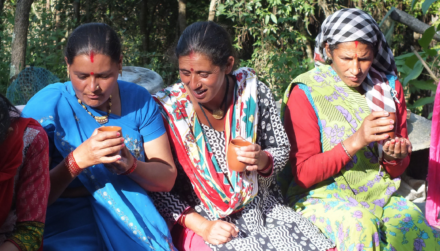
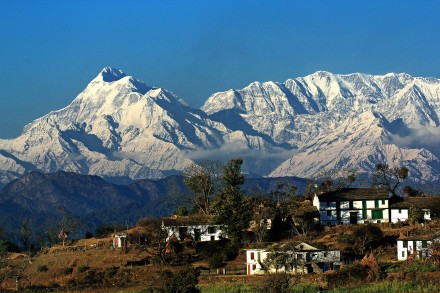
GREAT NEWS! The Majkhali village homestay mothers’ group, the Jagrati Swayam Sahayta Group, has won the ICIMOD Mountain Prize 2020. (www.icimod.org/mountainprize) This is a really a great honour for everyone involved. This award really rewards the tremendous effort and achievements … Continue reading →
WITHOUT RAINFOREST we do not have oxygen to breathe. We do not have food to eat either as biodiversity collapses and precious pollinators are pushed to the brink of extinction. Indigenous people are on the front line of environmental destruction. … Continue reading →
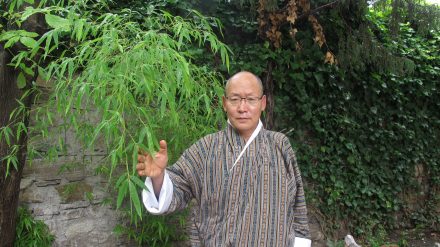
DASHO KARMA URA speaks on ‘Expert Speak’ – a virtual platform under the Asian Confluence Web Series Program that was launched to gather insights for the new COVID-19 world and beyond. Dasho Karma Ura was a guest on episode 5 … Continue reading →
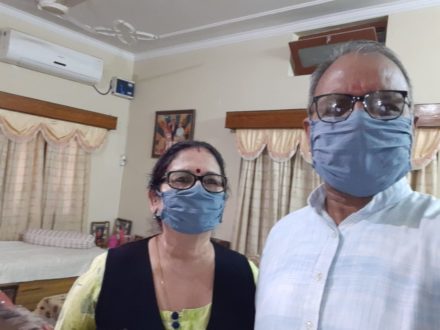
SUMAN BISHNOI and her husband Surender Kumar live in Paonta Sahib in Himachal Pradesh. Suman said that even before this pandemic struck, she had decided to try and make some masks to cope with the increasingly bad pollution. But she … Continue reading →
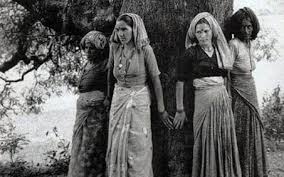
45 YEARS AGO, in the 1970’s, there was a non-violent grassroots protest movement aimed at the protection and conservation of biodiversity of trees and forests in India, and how more actions needed to be taken to protect nature that supplies … Continue reading →
WOMEN IN AVIATION NGO is challenging the Aviation Industry through education. How many percent of pilots are women? 3 percent? 5 percent or 11 percent? You might be surprised to find out that the country with the highest percentage of … Continue reading →
HOW DO WE VIEW OURSELVES and our place in the world? A question that every great philosopher has wrestled with throughout time, but also one which we are revisiting in the light of the climate crisis especially amongst a growing … Continue reading →
Below is the keynote speech ’Who Should Own the Earth?’ by Dasho Dr Karma Ura at the Earth Trusteeship Forum, Chulalongkorn University, Bangkok. The Earth Trusteeship Platform offers open, decentralized, ‘multi-polar’ and independent creative space for persons and organisations motivated … Continue reading →
NORDIC BY NATURE is podcast bringing new perspectives on deep ecology. In 12 episodes, and with a global perspective, Nordic By Nature explores human, social and personal resiliency and adaptability that is needed for these challenging times. The podcast is … Continue reading →
A LOT HAS BEEN HAPPENING since Professor Pushpesh Pant and Chef Nishant Choubey attended the Tasting India Symposium in Delhi in December 2017. At that time, Chef Nishant was curating food experiences at the elegant aero-city Roseate House. Soon after, … Continue reading →
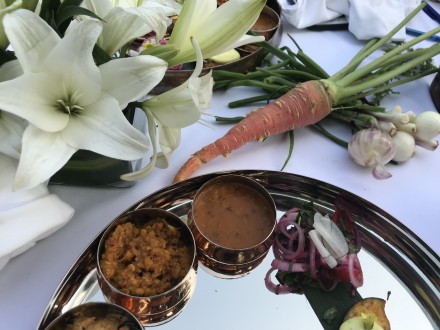
THE INAUGURATION LUNCH of the Tasting India Symposium in Delhi was at Roseate Farm; a venture into small-scale organic farming and the ‘heart project’ of Mrs. Radha Bhatia, Chairperson of the Bird Group that owns the family of Roseate hotels. … Continue reading →
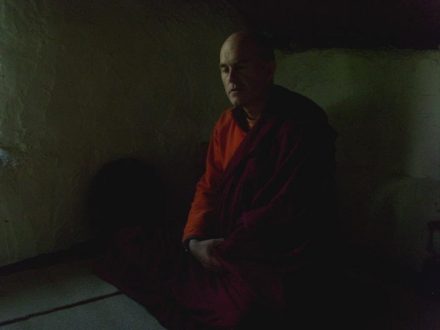
IN TEN DAYS TIME, Tenzin Shenyen will embark on a 3-year Tibetan Buddhist retreat in Germany that “begins a cycle of practices to stabilise, concentrate and open the mind through more meditative practices that… include practices aimed at transcending one’s … Continue reading →
A NEW EDUCATIONAL PLATFORM The Institute of Advanced Design Studies (IADS), is set to launch in Budapest, Hungary, co-founded by Karina Vissonova, PhD and Róbert Héjja, PhD. Some of you may remember the article on Karina a while back. Well, … Continue reading →
ON THE SOUTH SIDE OF DELHI in Gurgaon is a technical college that has high ambitions to provide a new type of education within service and hospitality. Unlike others, this college has a strong focus on applied knowledge and circular … Continue reading →
You don’t have to go to the Himalayas to find yourself – but it might help! Immersing yourself in natural surroundings brings a huge amount of physical and psychological benefits. But naturalness is much more than a superficial sense of … Continue reading →
Many of us dream of quitting our jobs and leaving the city, but how many of us manage to do it? I asked Innovation Strategist, Karina Vissonova, how she and her partner Aron designed ‘the good life.’ Q: What was … Continue reading →
Food for Change a new platform in Stockholm. Food for Change is a CSR platform for businesses connecting waste food with people in need. Local supermarkets explore how to reuse all the waste food they throw away every day, by creating a … Continue reading →
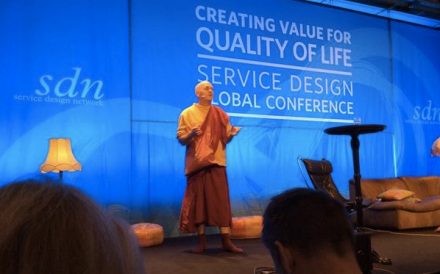
THE ARTIST-MONK Tenzin Shenyen spoke at a Service Design Network conference in Stockholm in 2014. Shenyen is the Tibetan word for friend. And Tenzin Shenyen is a British-born Tibetan Buddhist monk who received his monk’s vows from His Holiness the … Continue reading →
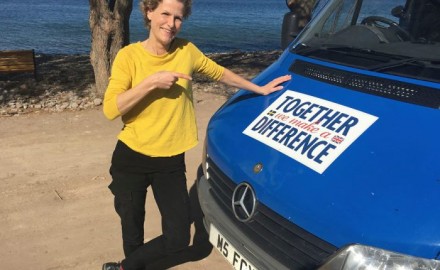
FOR A FEW WEEKS I followed the efforts of two independent volunteers Joanna Ågren and Jonny Bradford, in Lesbos and Athens in Greece, whilst helping to put up their rough notes into the blog Together2016 that documents their personal experiences on the … Continue reading →
CHANGING PLACES with Ninos Dankha, Prince of Assyria. It’s easy to compare Ninos Dankha’s sultry tones to the searching expression of Nick Drake, or the pared-back honesty of Tim Buckley. It’s certainly in that Hall of Fame that he belongs. … Continue reading →
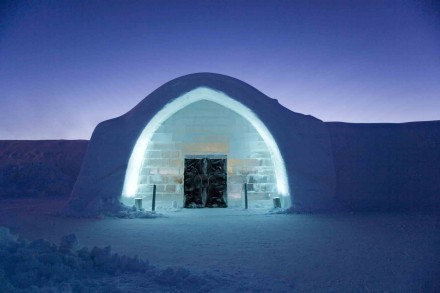
The Artic circle is home to artist Laila Kolostyak. Ice Circle is Laila’s brainchld, a seminar, a network and workshop with over 20 selected snow and ice professionals from Russia, Finland, Sweden and Norway. The seminar is funded by Kulturkontakt … Continue reading →
RADIO SHENYEN is the blog of Tibetan Buddhist monk Tenzin Shenyen, with its own dedicated space on Tumblr and Blogspot. Radio Shenyen is a blog part poetry, part diary, part letter, by the British born Tibetan Buddhist monk, Martin Hodgson, … Continue reading →
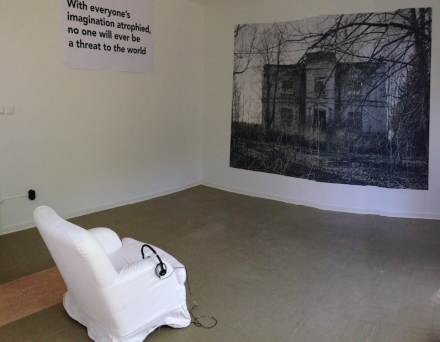
THE EXHIBITION by Pavel Matveyev at Cigarrvägen 13, Stockholm, is titled “With everyone’s imagination atrophied, no one will ever be a threat to the world #3.” A complex and though-provoking title presents a very simple installation of one large scale … Continue reading →
ON ALLEN GRUBESIC. Random exhibiting artist. An exhibition by Allen Grubesic promises a thought-provoking moment of clarity for people familiar with his work and those new to it. Stripping messaging back to its core essence is the nature of Grubesic’s … Continue reading →
ALL DESIGN aims to take into account multiple perspectives. But how much do our design decisions create negative impacts and outcomes that we would, normally, horrify us – if we consciously designed them? This is the challenge Design faces. Visualizing … Continue reading →
HOW DRAWING SAVED MY LIFE by Ilkka Suppanen. As long as I can remember, I have been drawing. As soon as I could hold a pencil I started scribbling. Those scribbles turned into drawings of my friends, my family, their … Continue reading →
GEORGE POLYA’s lovely book How to Solve It, is not just about mathematics but about problem solving in a wider sense. xvi Guidelines are not literal p1 A teacher should help the students, share knowledge, and swap places p15 — … Continue reading →
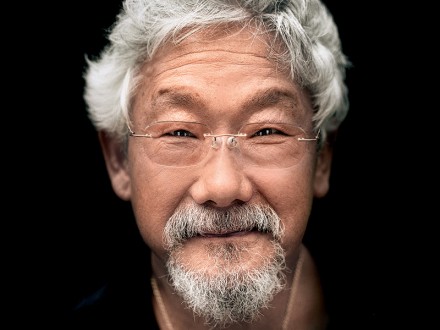
“WHAT WE DO or don’t do in the next years will decide whether we survive as a species,” said David Suzuki to a sold-out crowd of 1,600 student and staff at John Abbott College in Ste-Anne-de-Bellevue, U.S. The lecture was … Continue reading →
Here’s a little piece of technology that can change the whole nature of connectivity, depending on how we choose to use it. Paraimpu is a new social tool that connects Objects with the Web so that you can control physical … Continue reading →
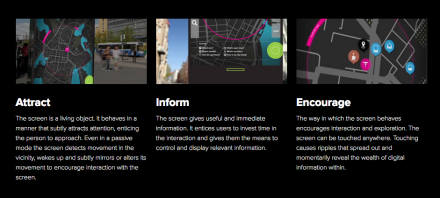
Urbanflow envisions a new interface and operating system for cities. Urbanflow creates a more efficient, transparent relationship between city administrators and citizens – via real time data. Urban screens show locally-oriented and general purpose data in easy to use interfaces … Continue reading →
Sandu Publishing House have released a book that features Stockholm based graphic designer, concept developer, art director and artist Johan Hjerpe. In parallel with commercial brand strategy and design work, Johan is highly active within the cultural field, driving projects … Continue reading →
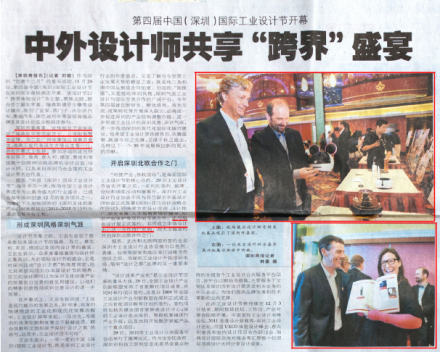
THE ARTICLES in local newspaper’s surrounding the Shenzhen Industrial Design Conference go something like this: “Sweden: Design for Better Business Sweden is the first country to become industrialized in Scandinavia and also the earliest country to develop the industrial design … Continue reading →
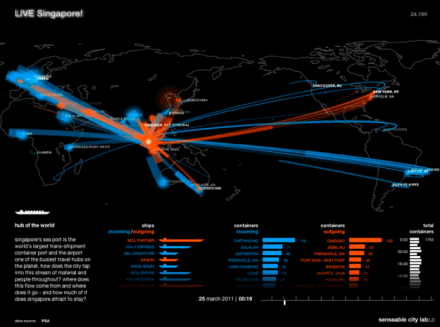
LIVE Singapore! provides people with access to a range of useful real-time information about their city by developing an open platform for the collection, elaboration and distribution of real-time data that reflect urban activity. Giving people visual and tangible access … Continue reading →