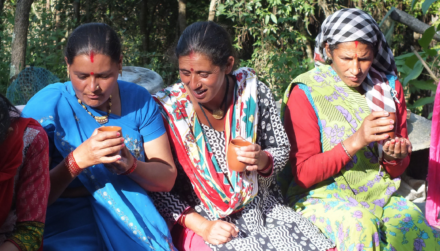
GREAT NEWS! The Majkhali village homestay mothers’ group, the Jagrati Swayam Sahayta Group, has won the ICIMOD Mountain Prize 2020. (www.icimod.org/mountainprize) This is a really a great honour for everyone involved. This award really rewards the tremendous effort and achievements … Continue reading →
Podcast episode 8: ON KNOWLEDGE Simple Landing page. Direct download of mp3. Intro: Welcome to Nordic By Nature, a podcast on ecology today inspired by the Norwegian Philosopher Arne Naess, who coined the term Deep Ecology. This episode, ON KNOWLEDGE, … Continue reading →
NORDIC BY NATURE was launched as a research and editing partner for environmental experts publishing globally relevant content on ecology today. Part of this work resulted in 26 audio recorded interviews and 11 podcast episodes, spotlighting activists from across the … Continue reading →
A NEW EDUCATIONAL PLATFORM The Institute of Advanced Design Studies (IADS), is set to launch in Budapest, Hungary, co-founded by Karina Vissonova, PhD and Róbert Héjja, PhD. Some of you may remember the article on Karina a while back. Well, … Continue reading →
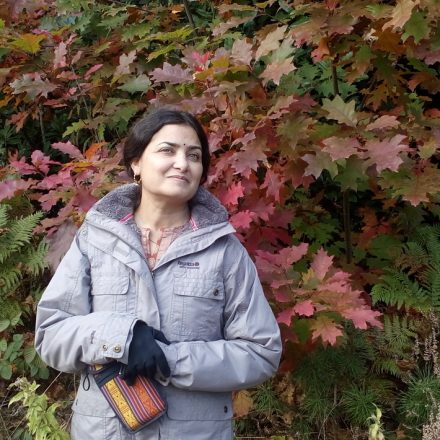
Many of us dream of quitting our jobs and leaving the city, but how many of us manage to do it? I asked Innovation Strategist, Karina Vissonova, how she and her partner Aron designed ‘the good life.’ Q: What was … Continue reading →
Food for Change a new platform in Stockholm. Food for Change is a CSR platform for businesses connecting waste food with people in need. Local supermarkets explore how to reuse all the waste food they throw away every day, by creating a … Continue reading →
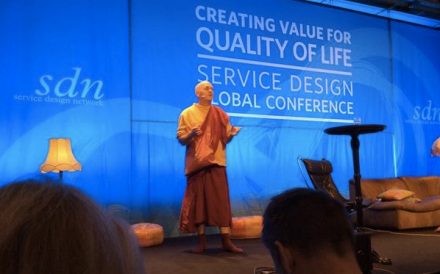
THE ARTIST-MONK Tenzin Shenyen spoke at a Service Design Network conference in Stockholm in 2014. Shenyen is the Tibetan word for friend. And Tenzin Shenyen is a British-born Tibetan Buddhist monk who received his monk’s vows from His Holiness the … Continue reading →
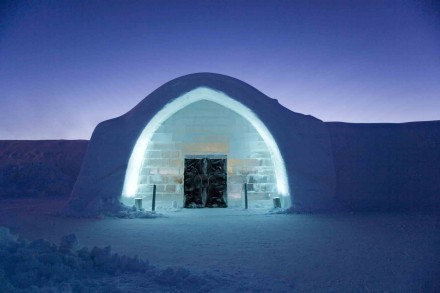
The Artic circle is home to artist Laila Kolostyak. Ice Circle is Laila’s brainchld, a seminar, a network and workshop with over 20 selected snow and ice professionals from Russia, Finland, Sweden and Norway. The seminar is funded by Kulturkontakt … Continue reading →
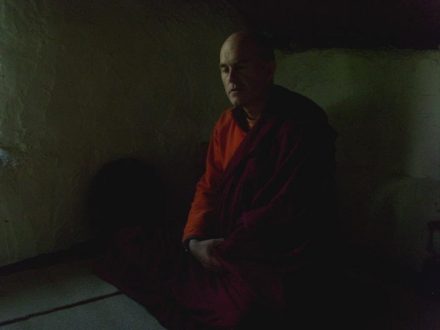
RADIO SHENYEN is the blog of Tibetan Buddhist monk Tenzin Shenyen, with its own dedicated space on Tumblr and Blogspot. Radio Shenyen is a blog part poetry, part diary, part letter, by the British born Tibetan Buddhist monk, Martin Hodgson, … Continue reading →
ALL DESIGN aims to take into account multiple perspectives. But how much do our design decisions create negative impacts and outcomes that we would, normally, horrify us – if we consciously designed them? This is the challenge Design faces. Visualizing … Continue reading →
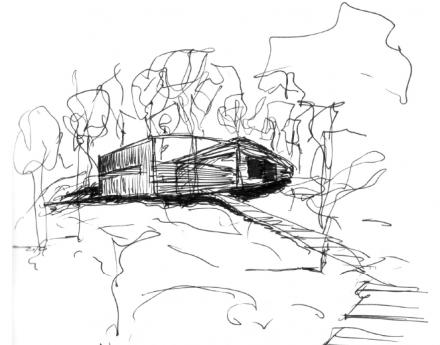
HOW DRAWING SAVED MY LIFE by Ilkka Suppanen. As long as I can remember, I have been drawing. As soon as I could hold a pencil I started scribbling. Those scribbles turned into drawings of my friends, my family, their … Continue reading →
Sandu Publishing House have released a book that features Stockholm based graphic designer, concept developer, art director and artist Johan Hjerpe. In parallel with commercial brand strategy and design work, Johan is highly active within the cultural field, driving projects … Continue reading →
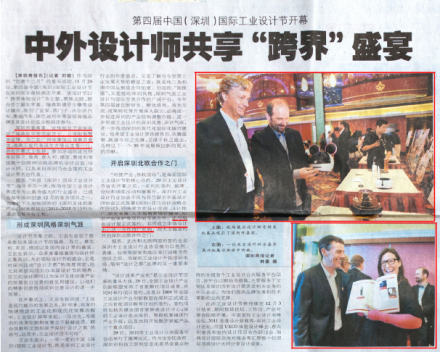
THE ARTICLES in local newspaper’s surrounding the Shenzhen Industrial Design Conference go something like this: “Sweden: Design for Better Business Sweden is the first country to become industrialized in Scandinavia and also the earliest country to develop the industrial design … Continue reading →